How Often Should a Septic Tank Be Pumped?
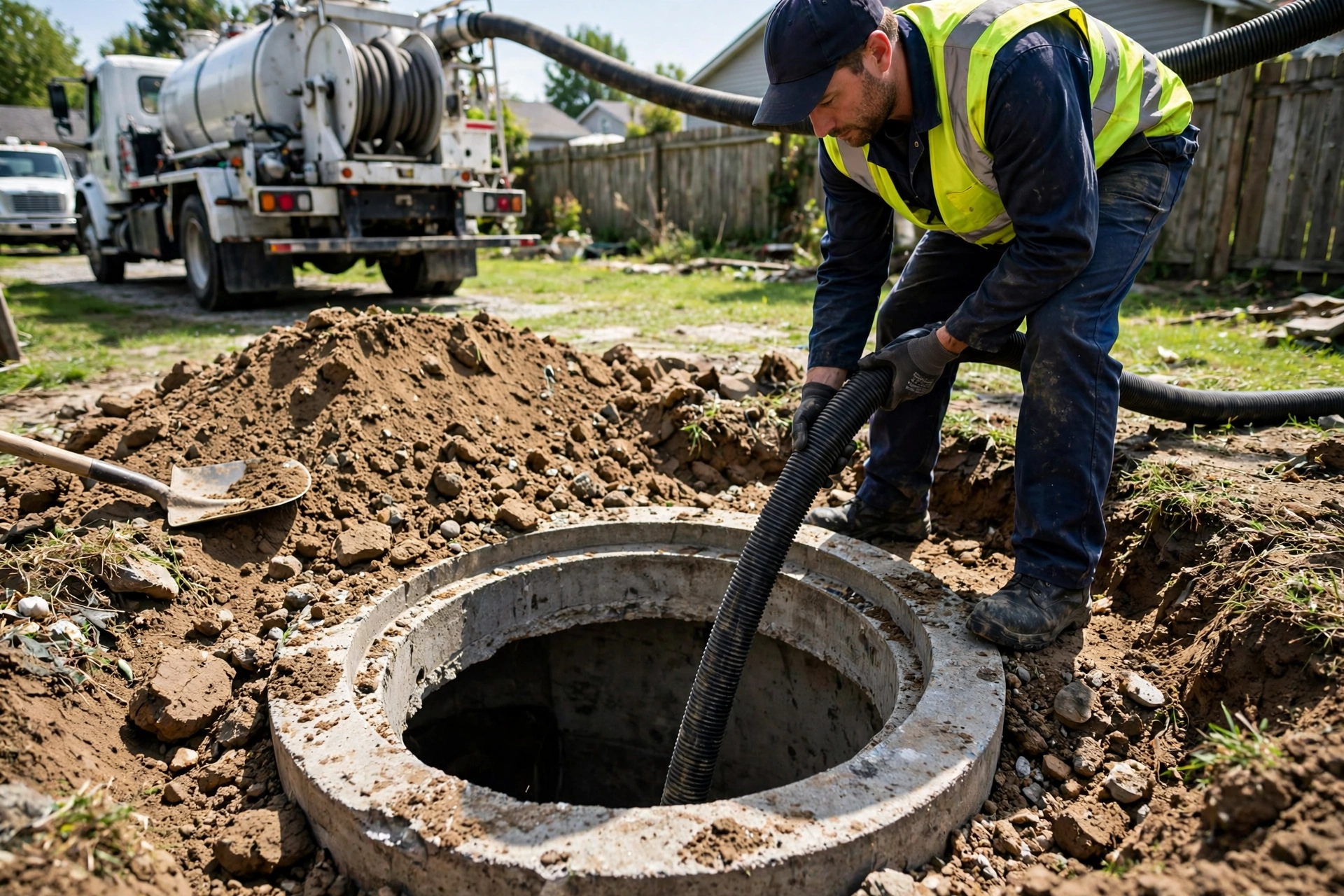
Every homeowner with a septic system asks the same question, usually right after buying the house or right after the first slow drain: how often does this tank actually need pumping? The answer you will hear most often — every 3 to 5 years — is correct for most homes, and it is the schedule most septic professionals recommend. But it is a range, not a date on the calendar, and where your home falls inside that range depends on five things you can check today.
This guide gives you the short answer first, then the five variables that set your real schedule, a household-size table you can match to your home, and the signs that you are already overdue. If you take one thing from it, take this: a pump-out is the cheapest septic service there is, and it is the one that prevents the most expensive failures. Guessing the schedule wrong in the long direction is how drainfields die.
The short answer: every 3 to 5 years
For a typical household — three or four people, a 1,000-gallon tank, normal water use — pumping every 3 to 5 years keeps the solids in the tank and out of the drainfield. That is the interval the industry has settled on, and it is the one that shows up in every professional guide, because it matches the rate at which sludge and scum actually build up in a tank that size.
Three years is the safe end of the range. Five years is the far end, and it only works when the household is small, the tank is large, and nothing unusual is going down the drains. If you have never had the tank pumped, or you do not know when it was last pumped, treat it as due now — the cost of pumping a tank that did not need it yet is small, and the cost of pumping one that needed it a year ago is much larger.
The 3 to 5 year rule is also the schedule that protects your warranty and your resale. Buyers ask for pumping records, and a tank with a documented pump-out every few years is a tank a buyer trusts. A tank with no records is a negotiation point, and not in your favor.
What actually sets your schedule
Five variables move your pumping interval up or down, and they are worth knowing because two of them are under your control. Household size is the first and the biggest: more people means more waste, more water, and faster buildup. A household of six fills a tank roughly twice as fast as a household of three. Tank size is the second: a 750-gallon tank serving four people needs pumping sooner than a 1,250-gallon tank serving the same four people, because there is less room for the solids to accumulate.
The third is the garbage disposal. A disposal sends ground-up food into the tank, and food waste adds to the sludge layer faster than anything else a household produces. Homes with a disposal that runs every night should plan on the short end of the range, or stop using the disposal for food scraps. The fourth is water use: long showers, frequent laundry loads, and a leaking toilet all push more water through the tank, stirring up the layers and pushing solids toward the outlet. The fifth is guests and laundry loads — a house that hosts often, or runs several loads of laundry a day, behaves like a larger household even when only two people live there.
- Household size — more people, faster buildup, shorter interval.
- Tank size — a smaller tank fills sooner than a larger one.
- Garbage disposal — food waste adds sludge faster than anything else.
- Water use — heavy laundry, long showers and leaks stir the tank and push solids out.
- Guests and laundry loads — a busy house behaves like a bigger household.
Household size and tank size: the schedule table
Use this table as a starting point, then let the pump-out itself correct it. When the technician opens the tank, they can see how full it was — and that is the best evidence of whether your interval should be shorter or longer. If the tank was nearly full at three years, your next visit should be sooner. If it was barely half full at five years, you can stretch a little.
The table assumes normal water use and no garbage disposal. Add a disposal, or run several loads of laundry a day, and move one row sooner. These are planning numbers, not promises — the tank tells the truth, and the technician reads it.
| Household | 750-gallon tank | 1,000-gallon tank | 1,250-gallon tank |
|---|---|---|---|
| 1–2 people | Every 4–5 years | Every 5 years | Every 5 years |
| 3–4 people | Every 2–3 years | Every 3–4 years | Every 4–5 years |
| 5–6 people | Every 1–2 years | Every 2–3 years | Every 3–4 years |
| 7+ people | Every year | Every 1–2 years | Every 2–3 years |
Planning guide for normal water use without a garbage disposal. With a disposal or heavy laundry use, pump sooner. The condition of the tank at the pump-out is the final word on your interval.
Signs you are overdue
The tank does not send a reminder, so the signs have to do it. Slow drains in more than one fixture at once — the kitchen sink and the shower both draining slowly — point to the tank rather than a single clogged pipe. Gurgling sounds from toilets and sinks mean air is trapped by a tank that is too full. Sewage smells inside the house or in the yard mean effluent is surfacing or backing up. Wet patches, or grass that is suddenly greener and faster-growing over the drainfield, mean the drainfield is taking more than it can handle.
Any one of these signs means the tank is due, and several together mean it is overdue. A sewage backup into the house is past overdue — it is an emergency, and the response is to stop running water and call for emergency septic service. Our guide to the signs your septic tank needs pumping ranks all seven warning signs by urgency, so you can tell a routine pump-out from a call that cannot wait.
What happens if you wait too long
Waiting too long does not just mean a fuller tank. When sludge and scum reach the outlet, solids flow into the drainfield — the network of pipes and soil that finishes treating the wastewater. Soil can only absorb so much solid material before it clogs, and a clogged drainfield does not recover on its own. The result is surfacing effluent, smells, wet ground, and eventually a backup into the house.
That is the expensive part of the story. A pump-out is the cheapest septic service there is. A drainfield repair, according to published cost guides, can run up to $15,000, and a full drainfield replacement can cost more. The difference between the two bills is a pump-out done on time. It is the least dramatic maintenance a homeowner does, and the one with the largest return.
There is also the everyday cost of waiting: slow drains that get slower, a toilet that gurgles every time the washing machine runs, and a yard you cannot use because it is wet and smells. None of that is an emergency until it is, and by then the fix is bigger than a pump-out. Pump on schedule, and the system stays boring — which is exactly what a septic system should be.
Get a free estimate
Reading is a good start — a visit is better. Tell us what is happening with your septic system and we will tell you what it needs and what it costs. Free, no obligation.
Related service: Septic Tank Pumping
Request a Free Estimate
Tell us what is happening — we reply with next steps and a free estimate.