Septic Tank Replacement in the South Bay, CA
Sometimes repair is the wrong call. When a tank has collapsed or the drainfield has failed, replacement is the honest answer — and we will tell you that before you spend money on a repair that will not last.
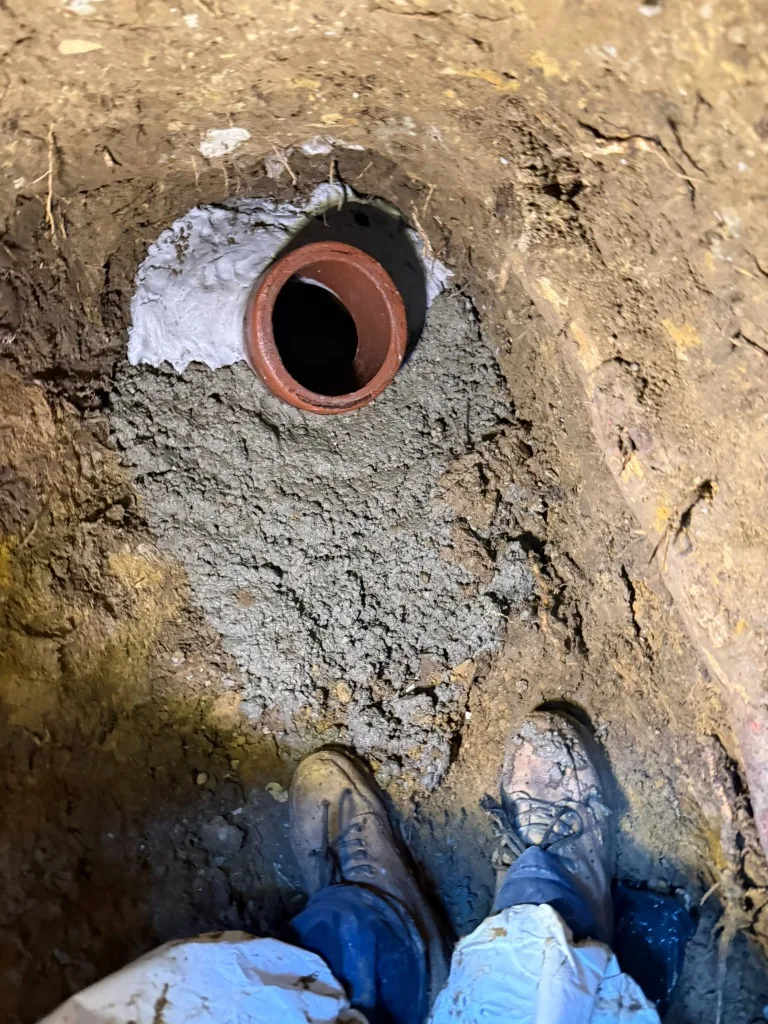 Septic Tank Replacement
A septic system does not last forever. Tanks crack, drainfields clog, and parts wear out together. When the system reaches the end of its life, no amount of pumping or small repairs will bring it back — and spending money on repairs that only buy a few months is worse than replacing it properly once.
SOS Pumping Inc has replaced septic systems for more than 40 years across the South Bay. Our licensed technicians diagnose first and recommend replacement only when the inspection shows it is the right call. We serve Torrance, Long Beach, Inglewood, Hawthorne and Gardena, and every replacement carries a warranty on all work.
This page explains when replacement is needed, what replacement really means, how the job runs, and what drives the cost. If you are weighing a repair against a replacement, read the repair-versus-replace section — it is the decision most homeowners get wrong, and it is worth getting right.
Is this a septic emergency?
If any of these four is happening right now, stop running water and call — do not wait for a scheduled visit.
Sewage backing up
Toilets, tubs or drains pushing sewage back into the house.
Call now →Tank or yard overflowing
Standing sewage, wet spots or pooling over the tank or drainfield.
Call now →Strong sewage smell
Rotten-egg or sewage odor indoors, or around the tank and yard.
Call now →Alarm sounding
The septic alarm is on — the tank is full or the pump has failed.
Call now →None of the four, but drains are slow or gurgling? That is usually a pumping, not an emergency — schedule a pumping or read the 7 signs your tank needs pumping.
When does a septic tank need replacing?
Replacement becomes the call when the system can no longer do its job, even with repairs. A cracked or collapsed tank is the clearest case: a tank that leaks wastewater into the soil or lets groundwater in cannot be patched back to reliable service. The same goes for a drainfield that has stopped absorbing water entirely — no pump-out will fix soil that is fully clogged.
Age is the other factor. A typical septic system lasts 20 to 40 years, depending on the materials, the soil, and how well it was maintained. A system that was pumped rarely and overloaded for years will fail at the young end of that range. A system near the end of its life that needs a major repair is often better replaced, because the next failure is already on its way.
Repeated repairs are a signal of their own. One repair is normal. A second repair a year later, then a third, means the system is failing piece by piece, and each fix only buys a little time. Add up what the last few years of repairs cost, and compare it with a replacement. Homeowners are often surprised at how close the two numbers already are.
- A cracked or collapsed tank that leaks or lets groundwater in
- A drainfield that no longer absorbs effluent, even after pumping
- Repeated backups that keep coming back after repairs
- A system at the end of its life — typically 20 to 40 years
- Major damage from roots, ground movement or heavy loads above the system
What replacement really means
The word replacement covers three very different jobs, and the price difference between them is large. Tank-only replacement means taking out the old tank and putting in a new one, while the drainfield and pipes stay in place. It is the right call when the tank has failed but the drainfield is still healthy.
Full-system replacement means a new tank and a new drainfield, with new pipes connecting them. That is the job when both parts have failed, or when the system is so old that replacing one part and leaving the other makes no sense. It is the biggest job and the most expensive one, but it is also a fresh start with a full expected life ahead of it.
Drainfield-only replacement sits in between. The tank is sound, but the field has failed, so the field is rebuilt while the tank stays. This is common where the tank was well maintained but the field was overloaded or clogged by solids from years of missed pump-outs.
Before we quote a replacement, we diagnose the whole system so the quote matches the job. A tank-only quote for a system whose drainfield is also failing is a quote that will not last, and we will not write one. The table below shows the three jobs at a glance.
| Job | What is replaced | When it is the call |
|---|---|---|
| Tank only | The tank | Tank has failed; drainfield still healthy |
| Drainfield only | The drainfield | Field has failed; tank is sound |
| Full system | Tank and drainfield | Both have failed, or the system is at end of life |
The drainfield: the cost multiplier
In almost every replacement job, the drainfield is what makes the price jump. A tank is a single unit that can be dug out and swapped. A drainfield is a network of pipes and gravel spread across a large area of your yard, and replacing it means excavation, new materials, and restoring the ground afterward.
The size of the field matters too. A larger household needs a larger drainfield, and poor soil needs more area than good soil to absorb the same amount of water. That is why two homes with the same tank can have very different replacement costs — the drainfield is different.
For market context, published cost guides put drainfield repair as high as $15,000, and tank replacement at $3,000–$7,000. Those numbers are market context, not our prices — but they show why the diagnosis matters. A job quoted as a tank replacement that turns out to need a new drainfield is a very different job, and it should be priced as one from the start.
The other cost driver is what has to happen before the digging starts: permits, soil testing and paperwork. A replacement is a construction job, and it comes with a paper trail. We handle that side of the job as part of the process, and we explain it in the quote so there are no surprises.
Soil testing deserves a word of its own, because it decides the size of the new drainfield. The test measures how fast the soil absorbs water, and slow soil means a larger field. It is a short job on its own, but it shapes the whole design: a field sized for the wrong soil is a field that fails early. That is why the test happens before the quote is final, not after the digging starts.
Our replacement process
A replacement starts the way every job of ours starts: with a diagnosis. We inspect the system, measure the tank, check the drainfield, and confirm that replacement is the right call and which parts need replacing. If a repair would genuinely do the job, we will tell you — a replacement we do not believe in is not a job we want.
Once the scope is agreed, the job runs in order: permits and paperwork first, then removal of the old tank or drainfield, then fitting of the new parts, then inspection and testing, then restoring the ground. We keep you informed at each step, because a replacement is a big job on your property and you should know what is happening in your yard.
Restoring the yard is part of the job, not an afterthought. Excavation leaves bare ground, and we backfill, grade and leave the area tidy so you can reseed or replant. It will not look like it did before on day one — fresh earth settles — but it will be left in a condition you can work with, and we tell you what to expect before the digging starts.
- Diagnose: full inspection to confirm what needs replacing
- Permits and paperwork: the required approvals and soil testing arranged
- Remove: the old tank or drainfield taken out and disposed of
- Install: the new tank, drainfield and connecting pipes fitted
- Inspect and test: the new system checked before the ground is closed up
Repair vs. replace
This is the decision that matters most, and it is the one where a straight answer saves the most money. Repair wins when the failure is limited — a baffle, a filter, a section of pipe — and the rest of the system has years left. Replace wins when the failure is structural, the system is at the end of its life, or a repair would cost a large share of a replacement and only buy a short time.
The question to ask is not what the repair costs, but what it buys. A repair that gives a twenty-year-old system five more good years is a good repair. A repair that gives a forty-year-old system with a failing drainfield six months is not a repair at all — it is a delay, and it costs more in the end than replacing now.
We give you both numbers when both options are real: the repair quote and the replacement quote, with a recommendation and the reasoning behind it. The decision is yours. Our septic tank repair page covers the repair path in full, so you can compare the two side by side.
Timing is worth planning around. A replacement is not a job to rush in the middle of a crisis, if you can avoid it. If the inspection says the system has a year or two left, use that time: get the quotes, arrange the permits, and schedule the work for a dry stretch when the ground is easier to dig. A planned replacement is cheaper and calmer than an emergency one.
How much does replacement cost?
We do not publish prices, because the range is too wide for a single number to be honest. A tank-only replacement, a drainfield rebuild and a full system are three different jobs with very different costs, and soil, access and size move the number further. Every job gets a free estimate based on your system, not a guess.
For market context, published cost guides put tank replacement at $3,000–$7,000 and drainfield repair as high as $15,000. Those are competitor-published ranges, not our prices, but they show the shape of the cost: the drainfield is the multiplier. Our cost guide explains the price factors in full.
What moves the price on a replacement is the scope, the size of the system, the soil, and how much digging and restoration the yard needs. A clear diagnosis at the start is what keeps the quote honest — it is the difference between a price you can plan around and a price that grows halfway through the job.
- Scope: tank only, drainfield only, or full system
- System size: larger households need larger tanks and fields
- Soil and site: poor soil and tight access add time and cost
- Removal and disposal: the old tank and field material must go
- Restoration: the yard put back after the digging is done
How long does a new system last?
A new septic system typically lasts 20 to 40 years, and the difference between the two ends of that range is mostly maintenance. Regular pumping every 3 to 5 years is the biggest factor: it keeps solids out of the drainfield, which is what kills systems early. The other factors are water use — fix leaking toilets and spread out laundry loads — and keeping vehicles, paving and heavy structures off the tank and drainfield.
A replacement is also a chance to fix the habits that wore the old system out. We leave you with a maintenance schedule and a record of the new system, so the next pump-out date is already on the calendar. A system that is pumped on schedule and inspected every few years is a system that reaches the long end of its life.
What your replacement includes
- Full diagnosis to confirm what actually needs replacing
- Plain-language comparison of repair vs. replace
- Free estimate before any work starts
- Permits, soil testing and paperwork handled
- Removal and disposal of the old tank or drainfield
- New system inspected and tested, with a warranty on all work
What it costs
Every septic job is priced on its own scope — tank size, access, condition and what else the visit finds. There is no flat rate that fits every tank, and we do not publish prices we cannot stand behind.
- What moves the price: tank size, pumping history, access to the tank, extra work found on site
- Free estimate: call or send the form and we quote your job, not a guess
Read the cost guide → for the market ranges and the four price factors, with sources.
What happens when you call
You call or send the form
Tell us what is happening and where. Emergency calls go first — stop running water while you wait.
We diagnose on site
A licensed technician opens the tank, measures sludge and scum, and checks baffles, inlet, outlet and the drainfield.
We pump or fix it
Pump-out, cleaning, repair or replacement — whatever the diagnosis calls for, quoted before the work starts.
You get a condition report
What we found, what we did, and when to pump next — so the next visit is planned, not an emergency.
Tell us about your septic system
A few details is all it takes — what is happening, where, and how urgent it is. We reply with next steps and a free estimate.
Prefer to read first? The cost guide breaks down every price factor, and the emergency page tells you what to do right now if sewage is backing up.
Request a Free Estimate
Tell us what is happening — we reply with next steps and a free estimate.