Septic Tank Cleaning in the South Bay, CA
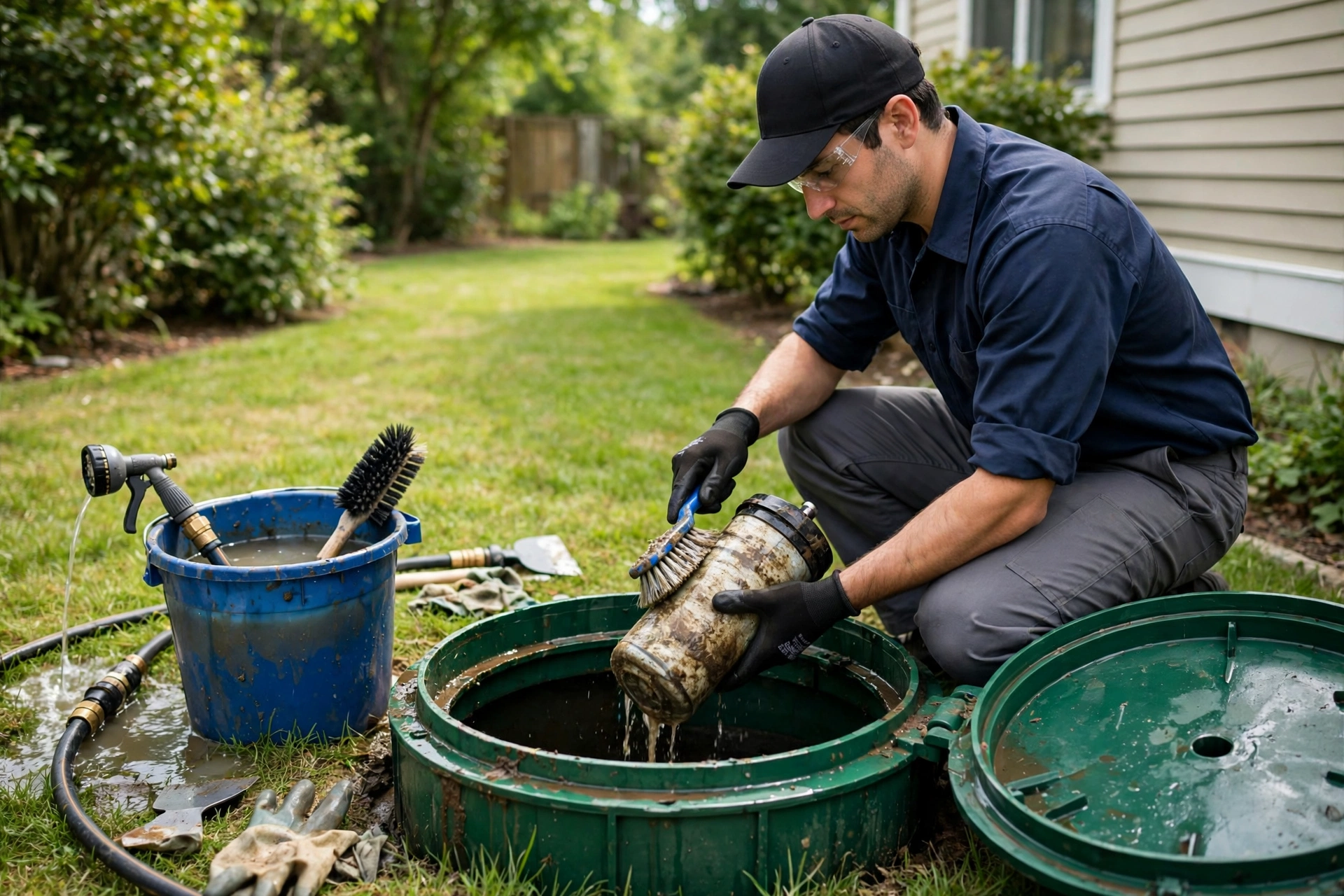
Cleaning goes further than pumping: we scrub the baffles, clear the inlet and outlet pipes, and clean the effluent filter, so the parts that protect your drainfield actually work.
 Septic Tank Cleaning
Pumping empties the tank. Cleaning makes the tank work properly again. The baffles, the inlet and outlet pipes and the effluent filter all collect grease and solids between visits, and a tank that is pumped but never cleaned still sends debris toward the drainfield. That is why every cleaning visit from SOS Pumping Inc includes a pump-out plus a proper scrub of the working parts.
We serve Torrance, Long Beach, Inglewood, Hawthorne and Gardena with licensed technicians, 40+ years of experience and a warranty on all work. If your tank is due for pumping, add the cleaning — it is the cheapest time to do it, while the tank is already open.
Is this a septic emergency?
If any of these four is happening right now, stop running water and call — do not wait for a scheduled visit.
Sewage backing up
Toilets, tubs or drains pushing sewage back into the house.
Call now →Tank or yard overflowing
Standing sewage, wet spots or pooling over the tank or drainfield.
Call now →Strong sewage smell
Rotten-egg or sewage odor indoors, or around the tank and yard.
Call now →Alarm sounding
The septic alarm is on — the tank is full or the pump has failed.
Call now →None of the four, but drains are slow or gurgling? That is usually a pumping, not an emergency — schedule a pumping or read the 7 signs your tank needs pumping.
Pumping vs. cleaning: what's the difference?
Pumping removes the contents of the tank: the liquid, the sludge on the bottom and the scum on top. It is the core job, and it is what keeps the tank from overflowing. But pumping alone does not touch the parts that guide wastewater in and out of the tank.
Cleaning is the work that happens while the tank is empty. We scrub the baffles that keep solids out of the drainfield, clear the inlet and outlet pipes, and clean or replace the effluent filter. Think of pumping as emptying a bathtub and cleaning as scrubbing the drain and the plug while you are at it. Both matter, and cleaning is what protects the drainfield between pump-outs.
What a cleaning visit includes
A cleaning visit is a pump-out with extra steps, not a separate mystery service. While the tank is open and empty, our technician works through the parts that wear out first.
- Full pump-out of the tank, liquids and solids
- Scrubbing the inlet and outlet baffles
- Clearing the inlet and outlet pipes of grease and buildup
- Cleaning the effluent filter, or replacing it if it is damaged
- Washing down the tank walls
- A condition check of the tank, lid and baffles while it is open
The effluent filter: the part most companies skip
The effluent filter sits in the outlet and catches fine solids before they can leave the tank. It is the last line of defense for your drainfield, and it is also the part most often ignored. A clogged filter slows the whole system down and can look exactly like a full tank: slow drains, gurgling toilets, smells.
We clean the filter on every cleaning visit and tell you if it needs replacing. A clean filter is a small job that prevents a large one, and it is one of the main reasons to have the tank cleaned rather than just pumped.
How often should you clean
Cleaning follows the same schedule as pumping: every 3 to 5 years for most homes, more often for large households or homes with a garbage disposal. There is no separate cleaning calendar to keep. When the tank is due for a pump-out, that is the time to clean it, because the tank is already open and empty.
Cleaning + pumping together
Booking cleaning and pumping as one combined visit is the practical choice. The truck is already there, the tank is already open, and the extra work takes a short time on top of the pump-out. It also means the technician sees the whole system in one visit and can give you one clear report. Ask for the combined visit when you call (805) 307-3409.
What your cleaning visit includes
- Full pump-out of liquids and solids
- Baffle and pipe cleaning
- Effluent filter cleaned or replaced
- Tank walls washed down
- Condition check of tank, lid and baffles
What it costs
Every septic job is priced on its own scope — tank size, access, condition and what else the visit finds. There is no flat rate that fits every tank, and we do not publish prices we cannot stand behind.
- What moves the price: tank size, pumping history, access to the tank, extra work found on site
- Free estimate: call or send the form and we quote your job, not a guess
Read the cost guide → for the market ranges and the four price factors, with sources.
What happens when you call
You call or send the form
Tell us what is happening and where. Emergency calls go first — stop running water while you wait.
We diagnose on site
A licensed technician opens the tank, measures sludge and scum, and checks baffles, inlet, outlet and the drainfield.
We pump or fix it
Pump-out, cleaning, repair or replacement — whatever the diagnosis calls for, quoted before the work starts.
You get a condition report
What we found, what we did, and when to pump next — so the next visit is planned, not an emergency.
Tell us about your septic system
A few details is all it takes — what is happening, where, and how urgent it is. We reply with next steps and a free estimate.
Prefer to read first? The cost guide breaks down every price factor, and the emergency page tells you what to do right now if sewage is backing up.
Request a Free Estimate
Tell us what is happening — we reply with next steps and a free estimate.