Septic Tank Pumping in the South Bay, CA
Regular pumping keeps your septic system working and protects your home from backups. SOS Pumping Inc serves Torrance, Long Beach, Inglewood, Hawthorne and Gardena with licensed technicians and a warranty on all work.
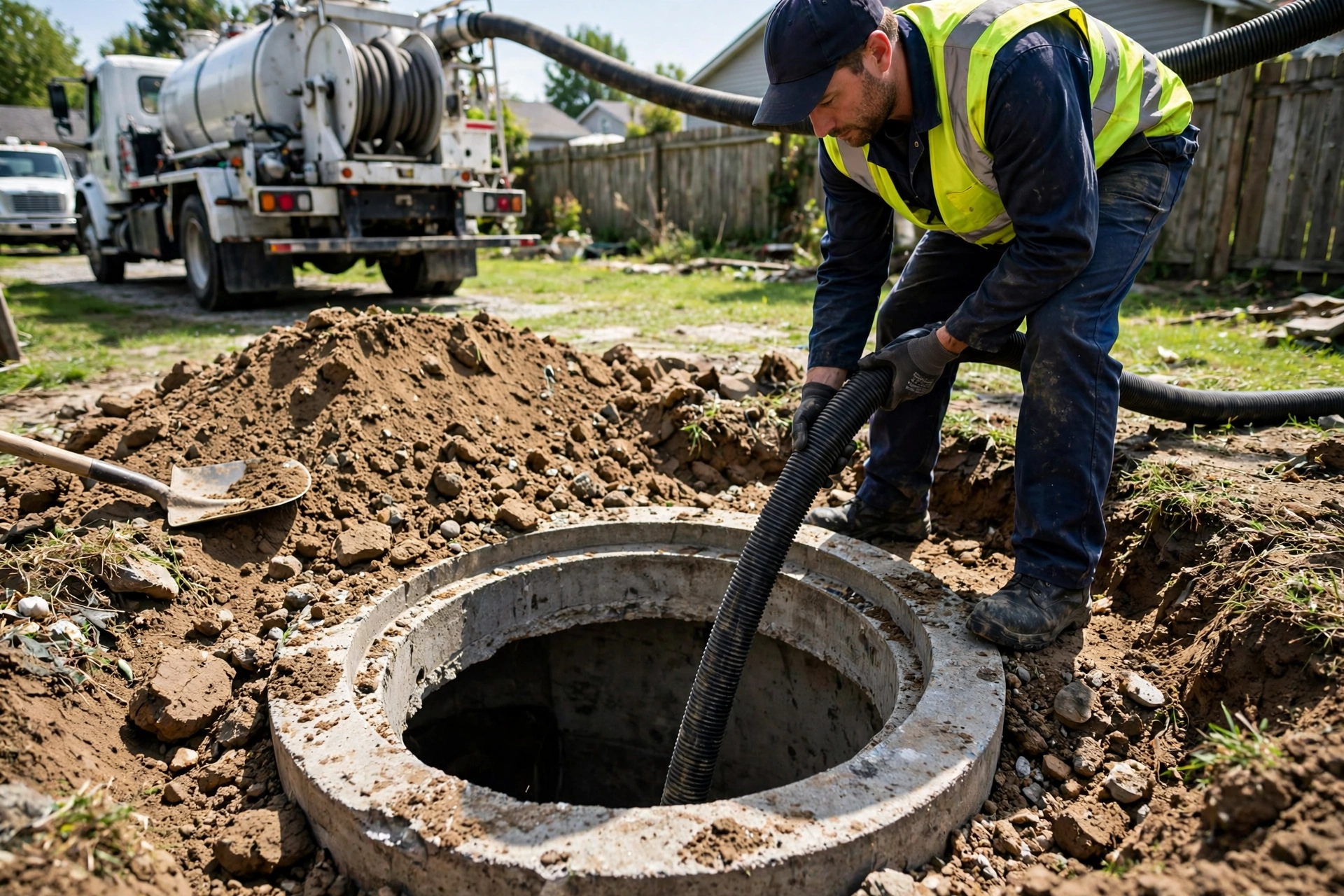 Septic Tank Pumping
A septic tank is not a set-it-and-forget-it part of your home. Everything that goes down your drains ends up in the tank, and the solids stay there. Pumping removes those solids before they build up far enough to clog the outlet, back up into the house, or damage the drainfield. It is the single most important maintenance job a septic system needs, and it is also the cheapest one.
SOS Pumping Inc has pumped septic tanks for more than 40 years. Our licensed technicians handle the whole visit, from locating a buried tank to measuring what is inside it and leaving you a clear report. If you live in Torrance, Long Beach, Inglewood, Hawthorne or Gardena and your tank is due, call (805) 307-3409 or send the form below for a free estimate.
Is this a septic emergency?
If any of these four is happening right now, stop running water and call — do not wait for a scheduled visit.
Sewage backing up
Toilets, tubs or drains pushing sewage back into the house.
Call now →Tank or yard overflowing
Standing sewage, wet spots or pooling over the tank or drainfield.
Call now →Strong sewage smell
Rotten-egg or sewage odor indoors, or around the tank and yard.
Call now →Alarm sounding
The septic alarm is on — the tank is full or the pump has failed.
Call now →None of the four, but drains are slow or gurgling? That is usually a pumping, not an emergency — schedule a pumping or read the 7 signs your tank needs pumping.
What septic tank pumping actually does
Inside your tank, wastewater separates into three layers. The heavy solids sink to the bottom and form sludge. Grease, oils and light solids float to the top and form scum. In the middle sits the effluent, the mostly clear liquid that flows out to the drainfield. A healthy tank holds the sludge and scum in place while only the effluent leaves.
Over time the sludge layer grows and the scum layer thickens, and the middle layer shrinks. When solids get close to the outlet, they start escaping into the drainfield, where they clog the soil and the pipes. That is how a system that only needed a pump-out turns into a system that needs a repair or a replacement. Pumping resets the clock: it removes the sludge and scum, restores the working volume of the tank, and keeps the drainfield clean.
Our pumping process, step by step
A pump-out is a straightforward job when it is done properly, and the steps matter. Skipping the measuring or the inspection at the end is how small problems get missed. Here is exactly what happens when our truck arrives.
- Locate the tank: we find the access points, even on a buried tank with no visible lid, and mark the spot for next time.
- Open and measure: we open the tank and measure the sludge and scum levels so you know how full it really was.
- Pump out the contents: the truck pumps the tank down, including the solids on the bottom, not just the liquid on top.
- Backflush and clean: we wash down the walls and baffles so the tank is genuinely clean, not just empty.
- Inspect the baffles: we check the inlet and outlet baffles for cracks or damage while the tank is open.
- Check the drainfield signs: we look for wet spots, smells or surfacing effluent around the drainfield area.
- Report and advise: you get a plain report of what we found and when the next pump-out should be.
How often should you pump? (3–5 years, by household size)
Most homes need pumping every 3 to 5 years, but the right interval depends on your household. More people means more wastewater and faster sludge buildup. A garbage disposal adds solid waste and shortens the interval. A large tank with two people in the house can go longer than a small tank with a family of five.
The table below is a starting point, not a rule. The only way to know your tank for certain is to have it measured. If you do not know when your tank was last pumped, treat it as due and book a visit. A pump-out now is always cheaper than a repair later.
| Household | Tank size | Typical pumping interval |
|---|---|---|
| 1–2 people | 1,000 gallons | Every 4–5 years |
| 3–4 people | 1,000 gallons | Every 3–4 years |
| 5+ people | 1,000–1,250 gallons | Every 2–3 years |
| Any household with a garbage disposal | Any size | Every 2–3 years |
Intervals are general guidance. Your tank's measured sludge level is what decides the date.
Signs your tank is due
A tank rarely fails without warning. The signs usually start small: a drain that is a little slower than it used to be, a faint smell near the tank or the drainfield, a toilet that gurgles after a shower. Homeowners often explain these away for months. By the time sewage backs up into a bathtub, the tank has been overdue for a long time.
If you notice any of the signs below, do not wait for the next scheduled interval. Book a pump-out and let a technician measure the tank. Our blog post on the signs your septic tank needs pumping walks through each warning in more detail.
- Slow drains in more than one fixture at the same time
- Gurgling sounds from toilets or drains after running water
- Sewage smells inside the house or over the drainfield
- Wet, soggy or unusually green patches over the drainfield
- Toilets that need flushing twice or back up after heavy use
What pumping costs
We do not publish prices, because no two pump-outs are the same. Tank size, how full the tank is, how easy it is to reach, and whether the visit finds anything else all change the price. Every job gets a free estimate before we start, so you know the number first.
For market context, published cost guides put a typical pump-out at $300–$500 for a standard residential tank, with smaller tanks at the low end of the range. Our cost guide explains the four factors that move the price and what a first visit usually involves.
| Factor | How it affects the price |
|---|---|
| Tank size | Residential tanks run 750–1,250 gallons; larger tanks take longer to pump |
| Access | A buried tank with no riser takes time to locate and dig out |
| How full it is | A tank years overdue holds more solids and takes longer |
| Extra work found | A cracked baffle or a clogged filter found on site adds to the job |
What pumping can't fix
Pumping is maintenance, not a repair. If your drainfield has already failed, pumping the tank will not make the drainfield work again — the soil is clogged, and the wastewater has nowhere to go. The same goes for a cracked tank or a broken baffle: an empty tank with a broken outlet baffle still sends solids into the drainfield.
That is why the inspection at the end of every pump-out matters. If we find a broken baffle, a cracked lid or drainfield trouble, we tell you plainly and explain the repair options. Our septic tank repair page covers the common failures and how we decide between a repair and a replacement.
Maintenance plans
The easiest way to stay on schedule is to let us keep the date for you. A maintenance plan means scheduled pumping at the right interval for your household, with a reminder before the visit so nothing slips. You do not have to remember when the tank was last pumped, because we keep the record.
A plan also means the same technicians see your system each time, so changes get noticed early. A baffle that was fine last visit and cracked this visit is a small repair if it is caught now. Call (805) 307-3409 to set up scheduled pumping for your home.
What your pumping visit includes
- Locating the tank and opening the access points
- Measuring sludge and scum levels before pumping
- Full pump-out of liquids and solids
- Backflushing the tank walls and baffles
- Inspection of inlet and outlet baffles
- A plain-language report with your next due date
What it costs
Every septic job is priced on its own scope — tank size, access, condition and what else the visit finds. There is no flat rate that fits every tank, and we do not publish prices we cannot stand behind.
- What moves the price: tank size, pumping history, access to the tank, extra work found on site
- Free estimate: call or send the form and we quote your job, not a guess
Read the cost guide → for the market ranges and the four price factors, with sources.
What happens when you call
You call or send the form
Tell us what is happening and where. Emergency calls go first — stop running water while you wait.
We diagnose on site
A licensed technician opens the tank, measures sludge and scum, and checks baffles, inlet, outlet and the drainfield.
We pump or fix it
Pump-out, cleaning, repair or replacement — whatever the diagnosis calls for, quoted before the work starts.
You get a condition report
What we found, what we did, and when to pump next — so the next visit is planned, not an emergency.
Tell us about your septic system
A few details is all it takes — what is happening, where, and how urgent it is. We reply with next steps and a free estimate.
Prefer to read first? The cost guide breaks down every price factor, and the emergency page tells you what to do right now if sewage is backing up.
Request a Free Estimate
Tell us what is happening — we reply with next steps and a free estimate.