Septic Tank Repair in the South Bay, CA
Most septic problems are fixable if they are caught early. We diagnose first, explain what is wrong in plain language, and repair what can be repaired — with a warranty on all work.
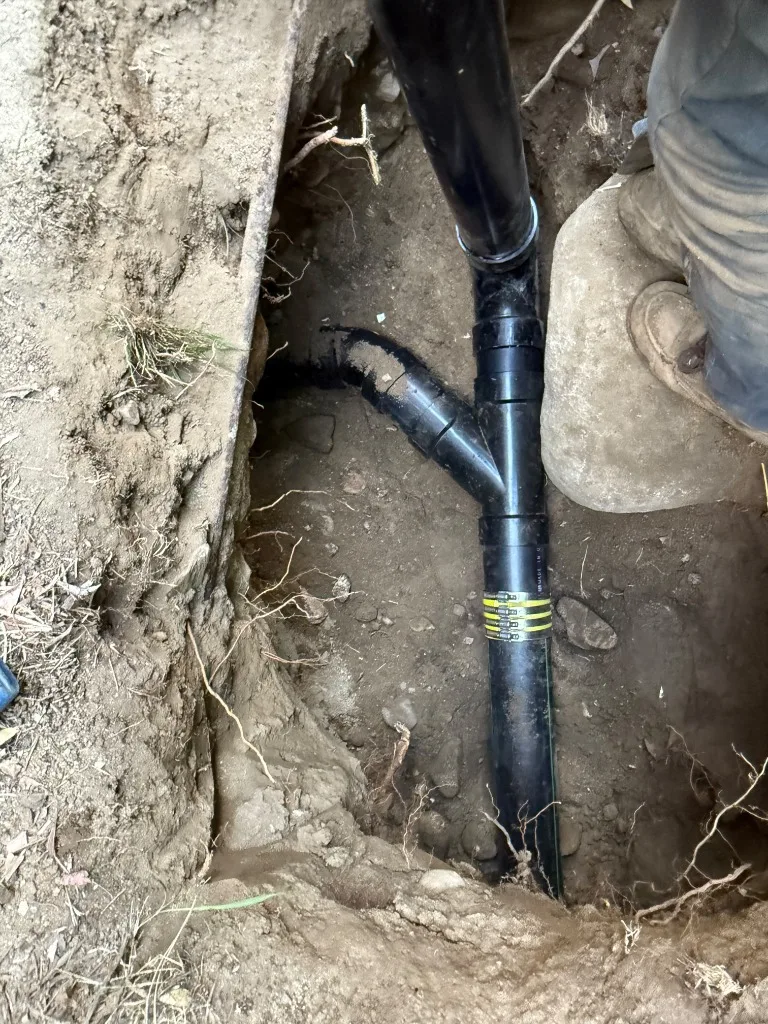 Septic Tank Repair
A septic system is a simple machine with a small number of parts, and almost every failure comes down to one of them. A baffle cracks. A pipe clogs or collapses. A filter blocks solid. Roots find their way in. The drainfield slowly stops absorbing. The good news is that most of these are repairs, not replacements — if they are found early and fixed properly.
SOS Pumping Inc has repaired septic systems for more than 40 years across the South Bay. Our licensed technicians start with a diagnosis, not a guess: we open the tank, measure it, check the drainfield, and find the actual cause before we quote anything. We serve Torrance, Long Beach, Inglewood, Hawthorne and Gardena, and every repair carries a warranty on all work.
Is this a septic emergency?
If any of these four is happening right now, stop running water and call — do not wait for a scheduled visit.
Sewage backing up
Toilets, tubs or drains pushing sewage back into the house.
Call now →Tank or yard overflowing
Standing sewage, wet spots or pooling over the tank or drainfield.
Call now →Strong sewage smell
Rotten-egg or sewage odor indoors, or around the tank and yard.
Call now →Alarm sounding
The septic alarm is on — the tank is full or the pump has failed.
Call now →None of the four, but drains are slow or gurgling? That is usually a pumping, not an emergency — schedule a pumping or read the 7 signs your tank needs pumping.
What breaks on a septic system?
Septic systems fail in a handful of predictable ways, and knowing which one you are dealing with is half the repair. The tank itself can crack, usually from age, ground movement or heavy loads above it. A cracked tank leaks wastewater into the soil and lets groundwater in, and it needs attention quickly.
Baffles are the most common small failure. The inlet baffle directs incoming wastewater down into the tank, and the outlet baffle keeps solids from flowing into the drainfield. When a baffle cracks, collapses or goes missing, solids escape and clog the drainfield. Replacing a baffle is a straightforward repair — leaving it is how a small job becomes a large one.
Pipes fail too. Inlet and outlet pipes clog with grease and solids, get crushed by vehicles, or break apart with age. Tree roots are a frequent cause: they grow toward the moisture and force their way into joints and cracks. A failed effluent filter has the same effect as a clogged pipe — the whole system slows down and drains back up.
Tank material matters as well. Most residential tanks are concrete, and concrete lasts well but cracks with ground movement and age. Older steel tanks rust through, and some plastic tanks can shift or float if the groundwater rises. The material does not change the symptoms you see in the house, but it changes the repair: a concrete tank with a cracked lid is a different job from a steel tank that has rusted out, and the inspection is what tells us which one we are looking at.
- Cracked or leaking tank walls and lids
- Broken, collapsed or missing baffles
- Clogged or crushed inlet and outlet pipes
- Failed or blocked effluent filter
- Drainfield failure from clogged soil or overloaded pipes
- Pump or alarm failure on systems that have them
- Root intrusion into pipes, tank joints and the drainfield
Drainfield problems: repair or replace?
The drainfield is the most expensive part of a septic system to fix, and it is the part homeowners fear most. But not every drainfield problem means a new drainfield. Sometimes the field is fine and the problem is upstream: a full tank sending solids into the pipes, a clogged filter, or a broken baffle. Fix the upstream problem, pump the tank, and the field can recover.
Sometimes the field itself is the problem. Years of solids, or too much water over too long, clog the soil so it no longer absorbs effluent. In that case the options are a partial repair — replacing a section of pipe or a failed lateral — or a full drainfield replacement. Which one depends on how much of the field has failed and how old the system is.
For market context, published cost guides put drainfield repair as high as $15,000, which is why the diagnosis matters so much. A wrong guess here is an expensive one. We check the tank, the baffles and the pipes before we touch the drainfield, so the repair we quote is the repair the system actually needs. Our septic tank replacement page explains the cases where replacement is the honest call.
There is one more possibility worth knowing about: a drainfield that is under strain can sometimes recover. If the cause was a full tank or a broken baffle, fixing that cause and resting the field — cutting water use while the soil dries out — can bring it back. It does not always work, and it takes weeks, not days. But when it does, it saves a replacement. That is another reason to diagnose before you dig: the cheapest fix is the one you only do once.
Warning signs you need a repair
A septic system usually warns you before it fails. The warnings start quietly — a drain that is slower than it was last month, a toilet that gurgles after a shower — and they get louder. The mistake is waiting for the warning to become a backup, because by then the repair is bigger and the mess is real.
The signs below mean something is wrong, not just that the tank is due for pumping. A tank that is due will show some of these too, which is why the visit starts with measuring the tank. If the tank is not the problem, we keep looking until we find the cause.
While you wait for the visit, cut your water use. Short showers, no laundry, no dishwasher, and as little flushing as you can manage. Less water in means less pressure on a system that is already struggling, and it can be the difference between a slow drain and a backup while the appointment is still a day away. If sewage is already backing up, treat it as an emergency and see our emergency septic service page.
- Slow drains in several fixtures at the same time
- Gurgling sounds from toilets or drains
- Sewage smells inside the house or over the yard
- Wet, soggy patches or standing water over the drainfield
- Alarms sounding on a system with a pump
Our repair process
Every repair starts the same way: diagnose first. We inspect the system, measure the tank, check the baffles, pipes and drainfield, and find the actual cause. A repair quoted from a phone description is a guess, and we do not work from guesses.
Once we know the cause, you get a plain explanation of what is wrong, what the fix involves, and what it costs — a free estimate before any work starts. Then we carry out the repair, re-inspect the system, and leave you a report of what was done. If the repair reveals a bigger problem, we tell you before doing more work, not after.
Most common repairs use standard parts — baffles, filters, pipe sections — and we carry the usual ones on the truck. If a part has to be ordered, we tell you the wait and the cost before we order it, and we make the system safe in the meantime. You will never find us halfway through a repair with a surprise part and a surprise price.
- Diagnose: inspect the tank, baffles, pipes and drainfield to find the cause
- Quote: a free estimate with the fix explained in plain language
- Fix: the repair carried out by licensed technicians
- Re-inspect: the system checked again to confirm the repair worked
Repair vs. replace: how we decide
The honest answer is that it depends on three things: what is broken, how old the system is, and what the drainfield looks like. A cracked baffle on a ten-year-old system is a repair. A collapsed tank on a forty-year-old system with a failing drainfield is a replacement. Most jobs fall somewhere in between, and the decision should be made from the inspection, not from a rule of thumb.
Age matters because parts wear together. Replacing one baffle on a system where the pipes and the drainfield are also at the end of their life can mean paying for a repair and then a replacement a year later. In that case the cheaper option over two years is the replacement now.
Cost matters too, and we are straight about it. If a repair costs a large share of a replacement and only buys a short time, we will say so. The decision is yours — our job is to give you the facts, the quote for each option, and a recommendation you can trust. Our septic tank replacement page covers the replacement path in full.
If you want a second opinion, get one — a replacement is a big decision and it should survive a second look. Bring the other company the same facts: the inspection report, the measurements and the photos if you have them. A second opinion based on the same findings is useful. A second opinion from someone who never opens the tank is not an opinion at all.
How much does a septic repair cost?
We do not publish prices, because the range is wide. Replacing a baffle or a filter is a small job. Replacing a section of drainfield pipe is a medium one. A full drainfield repair is a large one. Every job gets a free estimate before we start, so you know the number first.
For market context, published cost guides put tank replacement at $3,000–$7,000 and drainfield repair as high as $15,000, which shows how much the answer depends on what is actually broken. The four factors below are what move the price on a repair job. Our cost guide explains the price factors in more detail.
A free estimate from us covers the diagnosis, the fix as we understand it, and the parts and labor included — in writing, before work starts. If the job changes once we are in the ground, we stop and re-quote before continuing. That is the only honest way to price a repair, because the ground does not always match the guess.
| Factor | How it affects the price |
|---|---|
| What is broken | A baffle or filter is a small repair; a drainfield is a large one |
| Access | A buried tank or drainfield takes longer to reach and work on |
| Age of the system | Old systems often need more than one part replaced |
| Urgency | An emergency call-out costs more than a scheduled repair |
What your repair visit includes
- Full diagnosis: tank, baffles, pipes and drainfield checked
- Plain-language explanation of what is wrong
- Free estimate before any work starts
- Repair by licensed technicians
- Re-inspection to confirm the fix worked
- Written report of the repair, with a warranty on all work
What it costs
Every septic job is priced on its own scope — tank size, access, condition and what else the visit finds. There is no flat rate that fits every tank, and we do not publish prices we cannot stand behind.
- What moves the price: tank size, pumping history, access to the tank, extra work found on site
- Free estimate: call or send the form and we quote your job, not a guess
Read the cost guide → for the market ranges and the four price factors, with sources.
What happens when you call
You call or send the form
Tell us what is happening and where. Emergency calls go first — stop running water while you wait.
We diagnose on site
A licensed technician opens the tank, measures sludge and scum, and checks baffles, inlet, outlet and the drainfield.
We pump or fix it
Pump-out, cleaning, repair or replacement — whatever the diagnosis calls for, quoted before the work starts.
You get a condition report
What we found, what we did, and when to pump next — so the next visit is planned, not an emergency.
Tell us about your septic system
A few details is all it takes — what is happening, where, and how urgent it is. We reply with next steps and a free estimate.
Prefer to read first? The cost guide breaks down every price factor, and the emergency page tells you what to do right now if sewage is backing up.
Request a Free Estimate
Tell us what is happening — we reply with next steps and a free estimate.